
Is Digital Photography The Most Trending Thing Now?
To succeed at flower photography, you won’t need any fancy equipment, but you will need to pay attention to detail. If you want to take beautiful flower pictures, like the ones in magazines, this article will help show you how you can do that with a digital compact camera.
In your camera’s menu, increase the sharpness and contrast of your “picture style”. Some photographers like to increase the saturation as well, but if you are going to post-process in RGB mode I wouldn’t increase saturation in-camera.
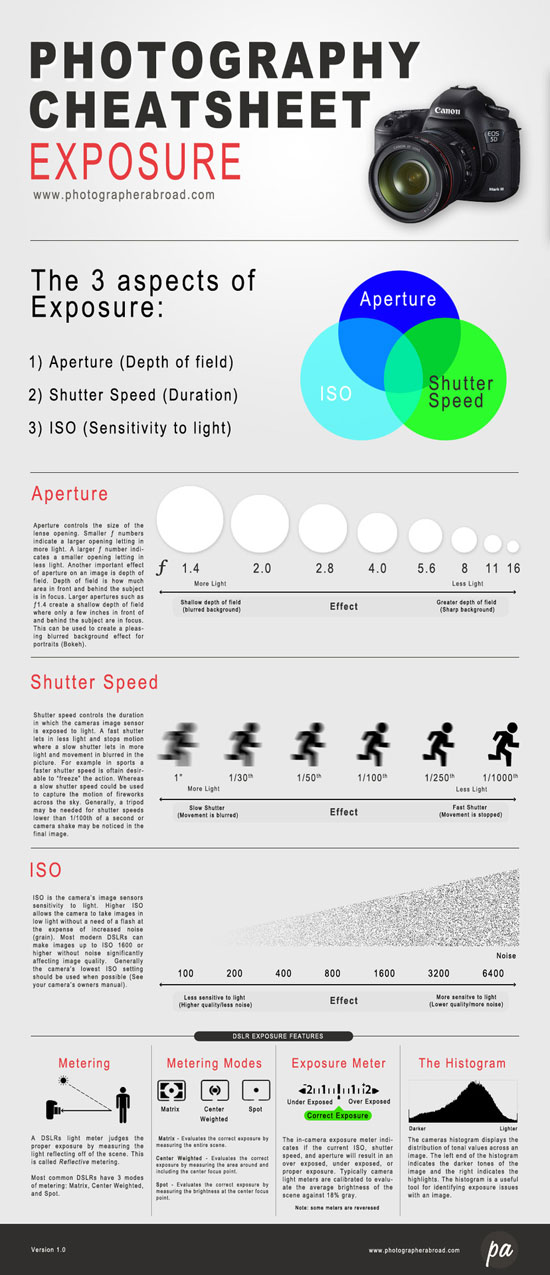
Based on what camera model you have the indicator means there is not enough or too much light. When the indicator is sitting in the center of the scale it means the camera believes there is just the right amount of light and you may safely take the photo. To be proficient to master light effectively simply begin shooting in automatic and write down the aperture and shutter speed that the camera has recommended. Then change your dial to manual and pick those same aperture and shutter speed settings. You will observe that those settings may not be the best ones that you once thought. At times at those settings will make the photo under exposed. This is why it is significant to shoot using manual.
This controls how sharp movement is in your images and allows you to capture it without blurring the image. A fast shutter speed freezes movement and a slow shutter speed blurs movement. For example, those milky waterfalls are shot using a slow shutter speed. A motorcyclist frozen in mid-air is photographed using a fast shutter speed.
The 50 and 60’s were the high points in B&W photography, but with the advent of color films and now DSLR’s B&W photos became rare. This is probably because people like color and B&W photos may look rather drab.
Photography Basics Take more than one shot. If you are on the fence about http://babieboomers.com or any other Photography Basics website then you need to research more. Don’t be content with your first photo. Take several, from different angles. You will be pleasantly surprised with the results.
Gary Player, international golfer and winner of every major title over five decades always said that the harder he practices the luckier he gets. Human nature is not predisposed to practice or exercise. Anything that becomes hard work we seem to shy away from. If you want to get good at what you are doing then practice is essential. No one likes stretching or exercising those out of shape muscles. The tedium of exercise is what prevents more healthy and fit people in the same way as practice does with your camera. If you don’t bite the bullet and commit to practicing you won’t amount to much with your photography.
If you aren’t using a studio backdrop, make sure you add some dimension to your pictures. This means to add depth by using props, utensils and recipe ingredients into the shot.
Make sure there is nothing in the background that is going to distract attention away from your subject . You need to ensure that attention is focused on the picture subject. Remove any distracting object from the background.

These are some simple steps to get you going and not turn you into a top bird photographer. They are some keys to getting into bird photography the easiest and simplest possible way. The bottom line is to have fun and continue having fun. I can assure you that when you start getting those great images you will not stop so make sure your bank balance is full because the expense starts here. Happy shooting!
To succeed at flower photography, you won’t need any fancy equipment, but you will need to pay attention to detail. If you want to take beautiful flower pictures, like the ones in magazines, this article will help show you how you can do that with a digital compact camera.
Click here for iPhone photography apps.

20 Photography Tips for Beginners
BY SPENCER COX
At whatever point I think about a valuable photography tip, I generally record it for some other time. The greater part of them are forgettable, however a couple are imperative to such an extent that I attempt to instruct them to whatever number picture takers as could be allowed. This article contains 20 of the best. These reduced down photography tips are straightforward, covering everything from tenderfoot camera method to imagination and sythesis. In case you’re learning photography, this rundown offers some insight you may discover supportive en route.
Before we start, on the off chance that you’d preferably digest this data in video design, you’re in karma. My “15 Tips” video underneath covers a considerable lot of these equivalent tips, with a couple new ones traded in too. Investigate on the off chance that you like:
There are incalculable cameras, focal points, and different embellishments available today. We invest a ton of energy auditing them at Photography Life, and the facts confirm that some are superior to other people (or more qualified for a given activity). However, when you’ve tried enough of them, the genuine takeaway is that essentially all that today is magnificent. The distinctions are quite often minor, particularly at a given cost.
Along these lines, utilize the camera you as of now have, and don’t think back. In pretty much every manner, the present section level DSLRs are better than the first in class film SLRs ever were. However some way or another those film picture takers figured out how to catch wonderful, famous photographs that despite everything look extraordinary today.
Substantially more significant are your imaginative aptitudes and information on camera settings. Spotlight your exertion on those, not on gathering camera hardware.

Work with Your Composition
To take drawing in photographs, you should be locked in with what you’re doing. Don’t simply fly by on autopilot. Rather, put thought into your sythesis and attempt to make your photographs comparable to conceivable.
That begins with knowing the fundamentals of how to make great photographs. Try not to cut off significant pieces of your subject with the edge of your casing. Keep your points of view level, and attempt to dispose of any interruptions in your photograph by changing your sythesis. Check whether your photograph has a feeling of parity and straightforwardness. What’s more, if the photograph doesn’t look great on your first attempt, continue testing until you take care of business.

Realize Which Settings Matter
There are a ton of camera settings, and it takes some training to get them right, particularly as a learner. Indeed, even progressed picture takers won’t generally do everything consummately. In any case, it merits figuring out how to set your camera appropriately, and which camera settings matter the most, so you have the most obvious opportunity to take the photographs you need.
Initially, have a go at rehearsing with camera modes other than full Auto. You won’t pick up anything if your camera is settling on all the choices for you. It may be befuddling from the outset, yet ideally our articles on gap, screen speed, and ISO will give you a decent head start. Those are the three most significant settings in the entirety of photography.
Beside gap, screen speed, and ISO, figure out how to concentrate appropriately by rehearsing with the distinctive self-adjust modes. You’ll most likely lean toward single-servo self-adjust (otherwise called One-Shot AF) for fixed subjects, and constant servo self-adjust (otherwise called AI Servo) for moving subjects. Try not to utilize manual center except if it’s dim to such an extent that self-adjust isn’t working.
Finally, shoot in RAW on the off chance that you need to alter your photographs, or believe there’s any opportunity you’ll alter them later on. JPEGs watch great out of camera, however the records have considerably less scope for post-handling. (On the off chance that you aren’t sure, shoot RAW+JPEG, and save the RAWs for later to be safe.) See RAW versus JPEG for additional.

Try not to Overexpose Highlights
At the point when you are picking your camera settings, it is basic to abstain from overexposing features in a photograph. The explanation? It’s just difficult to recoup any detail from white regions of a photograph. By and by, I incline toward the sky in my photographs to have decent surface and shading, instead of being only a major, featureless mass, and I wager you do as well.
It’s really simple to keep your features flawless. In any case, this is the place screen speed, opening, and ISO are so significant. These are the main camera settings that legitimately influence the brilliance of a photograph (overlooking blaze settings, obviously). Indeed, even introduction pay – a significant setting itself – just advises your camera to transform at least one of these three factors.
At the point when you’re taking photographs, watch the camera screen to check whether there is any overexposure. On the off chance that there is, the main thing you ought to do is bring down your ISO to its base worth (generally ISO 100). On the off chance that it’s now there, utilize quicker screen speed. That will deal with the issue. With respect to opening, ensure it isn’t set to an insane worth (f/32, f/45, and so on.) and you’ll be acceptable.

Focus on the Light
Likely the absolute most significant some portion of photography is light. On the off chance that you snap a picture with great light, you’ve stepped toward getting a decent picture. Yet, what considers great light? It’s not about nightfalls.
Regularly, the objective here is to adjust the light’s power between your subject and foundation. Regardless of whether you’re capturing an astounding nightfall, the photograph could be destroyed by a totally dim and outlined closer view.
The least demanding approach to unravel this is to focus on the heading and delicateness of the light. On the off chance that the light is excessively unforgiving, you could get awful shadows moving over your subject, which is particularly an issue for picture photography. In the event that the light is originating from an unflattering edge, see what you can do to move the light source (in a studio) or move the subject (outside) – or hold up until the light is better (scene photography).
Additionally, in case you’re taking handheld pictures, ensure there is sufficient light. If not, utilize a blaze or move where it’s more brilliant. The simplest method to get flat, stained photographs is to shoot in situations without enough light.

Take as much time as is needed
It’s anything but difficult to commit errors in photography on the off chance that you aren’t cautious. The most ideal path around this is to back off and take as much time as necessary at whatever point conceivable, especially when you are initially starting to learn photography.
To begin with, twofold check your camera settings. In case you’re shooting outside pictures on a radiant day, yet you’re utilizing the previous evening’s settings for capturing the Milky Way, something is appallingly off-base. Slow down and set aside the effort to take care of business.
At that point, save a similar outlook for each other significant choice. Is your piece on a par with conceivable? Did you self-adjust in the perfect spot? Have you done all that conceivable to improve the lighting conditions?
Furthermore, don’t tune in to individuals who instruct you to abstain from evaluating photographs in the field. Of course, it’s an impractical notion to survey photographs when something stunning is occurring before you, yet you’ll quite often have some personal time between shots. Make sense of the issues with a picture in the field – not back at your PC.

Move Your Feet
It’s anything but difficult to stall out in one spot while you’re taking pictures. Try not to fall into that trap. Rather, move your feet (or your tripod) however much as could be expected. Hop in control, change the stature of your camera, stroll advance and in reverse, do whatever you have to do – yet continue moving.
In the event that you take twelve photographs from a similar stature, confronting a similar course, without moving your feet or tripod by any means, learn to expect the unexpected. They won’t be totally different. On the off chance that your whole portfolio is taken from a similar stature and with no experimentation, you’re passing up some incredible photographs.
Moving around is the best way to change the relative sizes and places of the articles in your photograph. Try not to like that your subject is too enormous and the scene out of sight is excessively little? Remain back and zoom in. Need to fix a stone that looks diverting? Move around until it’s out of your organization, or too little to be in any way an aggravation.

Realize When to Use a Tripod
Tripods are perhaps the best development in photography. They everything except kill perhaps the trickiest issue there is – an absence of light. With tripods, you can shoot multi-minute presentations and catch subtleties so dim that they are undetectable to the natural eye. Indeed, even in a more brilliant scene, tripods improve the steadiness of your sythesis and assist you with taking more honed photographs.
Anyway, when would it be a good idea for you to utilize a tripod? On the off chance that your subject is fixed, quite often. That implies scene picture takers, building picture takers, and still life photographic artists better have a decent reason on the off chance that they aren’t utilizing a tripod.
Occasion photography and activity are somewhat unique since the facts demonstrate that a tripod can back you off.
Photography Tips for Beginners
| 1 | Use the Camera You Already Have—start simple |
| 2 | Work with Your Composition—take engaging photos |
| 3 | Learn Which Settings Matter—experiment with the settings |
| 4 | Don’t Overexpose Highlights—balance the subject to background |
| 5 | Pay Attention to the Light |
| 6 | Take Your Time-–don’t rush |
| 7 | Move Your Feet—look for the best angle |
| 8 | Know When to Use a Tripod—get more clarity |
| 9 | Know When to Use a Flash—try with and without |
| 10 | Clean Your Camera Lens—obviously |
| 11 | Be Prepared |
| 12 | Don’t Use a Cheap Filter—you get what you pay for |
| 13 | Learn Basic Post-Processing—learn how to edit |
| 14 | Back Up Your Photos—just like any computer devise |
| 15 | Get Organized-–what them easy to find |
| 16 | Try Something New—experiment |
| 17 | Meet Other Photographers—ask for tips |
| 18 | Fix Your Weak Points-–keep improving |
| 19 | Look at Your Old Photos—criticize them |
| 20 | Have Fun—that’s the whole point! |
Source: Photographylife.com
Individuals Will Take 1.4 Trillion Photos This Year — Here’s How To Turn Those Pictures Into A New Side Hustle
Individuals will snap more than 1.4 trillion photographs in 2020.
Huge numbers of those photos will wind up on Facebook or Instagram. The rest will in all likelihood stay in a computerized collection, never to be thought of again.
Before online media turned into the standard for sharing recollections, imaginative relatives around the globe went through hours cutting and creating their physical photographs into scrapbooks of their preferred minutes. The Covid closure might be bringing back that revered convention.
“We’re seeing it with recent college grads. They’re searching for something substantial. They’re searching for something that they’ve made themselves,” said Caleb Hayhoe, administrator of the scrapbook flexibly organization Creative Memories.
Hayhoe said the organization’s production line in St. Cloud, Minnesota, is working nonstop to stay aware of requests since the Covid closure in March. The organization’s deals were up around half in the months following the sanctuary set up orders that gave individuals a huge amount of time to get new interests.
Inventive Memories utilizes a social selling model that enrolls individuals to sell their item and keep a level of the benefit. With deals up no matter how you look at it, a considerable lot of the venders are having record years, as per Hayhoe.

In any case, business hasn’t been going great for everybody in the business.
More from Invest in You:
‘Typically Irrational’ creator says this is the thing that financial specialists ought to do during the pandemicCoronavirus constrained this couple into a 27-day isolate in the midst of their vacation cruiseHow to get ready for a relative with COVID-19
Writer and full-time scrapbooking master Amy Tangerine ventures to the far corners of the planet training workshops and helping individuals open their imagination. With live occasions on hold for years to come, a major aspect of Tangerine’s business evaporated for the time being.
Tangerine, whose self-named items sell in significant retail locations the nation over, turned to showing on the web flows through her site and said that the reaction from her adherents has been incredible.
A significant number of Tangerine’s customers utilize their recently discovered scrapbooking aptitudes remedially as an approach to associate with their recollections, and some have likewise figured out how to use their abilities into money by means of online commercial centers.
The crafters can exploit online patterns and backing famous social developments with carefully assembled items a lot quicker than conventional retailers, as per Tangerine. This gives them an edge when making product to sell.
It takes Tangerine around a half year to structure and produce an item to put on store racks, however her scrapbooking customers can create stickers and different knickknacks and sell quickly utilizing a commercial center like Etsy.
I have a GREAT Course for you on Digital Photography! CLICK HERE










Related Posts


About The Author