
BUILDING WEALTH – Part 4

Building Wealth-Part 4
By Gary John
In this series I would like to discuss how to build perpetual wealth, the reasons for diversifying your investments, how to approach diversification, and how to leverage different asset classes and diversification strategies to increase your wealth and ensure your personal prosperity, and how to tax-shelter your wealth.
(As a disclaimer, I am not a CPA, lawyer, or financial planner so it is in your best interest to seek differing opinions on the topics I present, so you can make your own decisions)
In part 3 we learned that the rich become wealthy by buying income producing assets. There are 10 different asset classes, of which we discussed four of them: Cash, Stocks, Lending and Real Estate. here are some more:

Farmland
Farmland is one of those assets that Americans cannot live without. We’re dependent on farmland to produce the food we all need to survive. There are three main ways to invest in farmland: REITS, personal farmland ownership and fractional farmland ownership.
Buying farmland REITS is perhaps the easiest way to buy farmland. Two popular farmland REITS are Gladstone Land Corporation (LAND) and Farmland Partners (FPI)
Buying a REIT has high liquidity (like stock) but owning personal farmland property may be illiquid.

Precious Metals
Precious metals, like gold, have a long, proven history as being a secure store of wealth and a hedge against economic crises. Gold spikes when there is economic chaos and when the dollar is weak.
Gold should be an important part of a diversified investment portfolio because its price increases in response to events that cause the value of paper investments, such as stocks and bonds, to decline. Although the price of gold can be volatile in the short term, it has always maintained its value over the long term. Through the years, it has served as a hedge against inflation and the erosion of major currencies, and thus is an investment well worth considering.
Gold is not an income-generating asset. Unlike stocks and bonds, the return on gold is based entirely on price appreciation.
As with any investment, it’s important to consider the time frame of investing, as well as to study market research to gauge an understanding of how markets are expected to perform. Gold is not a foolproof investment, as with stocks and bonds, its price fluctuates depending on a multitude of factors in the global economy. With all investment portfolios, diversification is important, and investing in gold can help diversify a portfolio, typically in market declines, when the price of gold tends to increase.
Other precious metals are: silver, platinum and palladium.
There are two main ways people invest in and obtain precious metals by buying physical coins and bars or in ETFS. I prefer ETFs

Cryptocurrency
I am sure you have heard people making millions of dollars with cryptocurrency but be aware of the risks as it’s an unproven asset and there is a risk of devaluation. This means your value may go down to zero and all capital invested is wiped out.
Cryptocurrencies are bought, sold, exchanged, and stored in ‘exchanges’. Two popular exchanges are Coinbase and Gemini.
Collectibles
One of the benefits of investing in collectibles is that you can enjoy using them. Driving an antique car or checking out your collection of old baseball cards can be a lot of fun.
There are many types of collectibles, including:
*Classic cars
*Antique firearms

*Rare comic books
*Rare baseball cards
*Rare currency
*Rare stamps
*Rare books
*Rare shoes
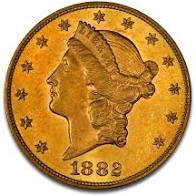
*Rare coins
*Rare liquor
*Rare stones
There is risk when you buy collectibles. You should carefully weigh these risks before you start investing in collectibles. Each type of collectible will have its own set of risks, market, and security requirements.

Final Thoughts
Most people have no idea how to get ahead. They have themselves in so much debt that they can’t think about saving for the future. They don’t have a budget and they think they need that new car, that new cell phone and that bigger house. They are not even funding their 401k. They are not thinking of their financial needs in the future. They think they are going to be healthy forever and work a long time. They think the government is going to take care of them with social security and Medicare. A lot of Americans will find a financial advisor either from the internet or friend. The advisor will present a beautiful financial plan for them that looks impressive. Since we may not be financially educated we give all of our money to ‘invest’ for us. Boy, are they in for a Big surprise.
Don’t get me wrong. I love nice cars, new iPhones, and a big house. But there are good ways and bad ways of getting these things. Have your positive income assets buy these.

In order to build lasting, perpetual wealth, you need to be proactive, take responsibility, and get financially educated. If you focus your efforts on investing in assets that cash flow, you can create perpetual money machines that make you truly wealthy.
You have to ‘unlearn’ the things we were taught. Social Security will not be enough to live on. Just randomly investing in your 401k or stock market is risky. You need to invest in income producing assets. This is the best way to ensure a strong financial future. In this series we talked about how to manage risk, how to approach diversification, how to invest in multiple asset classes, how to develop passive income streams, and how to help ensure your long-term financial success. I hope you enjoyed this series.
Stay tuned for Part 5 where I get into more detail on my favorite asset class, Dividend Stock!

Related Posts


About The Author


Yeah bookmaking this wasn’t a risky decision great post! .